
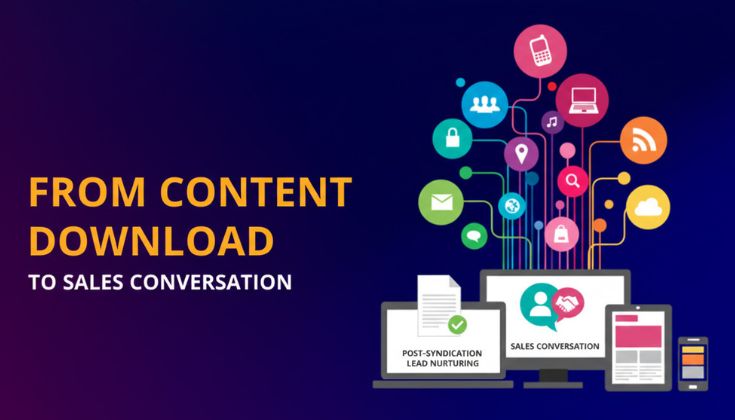
From Content Download to Sales Conversation: A Smarter Approach to Post-Syndication Lead Nurturing
Celebrating a content download as a marketing victory is understandable. It feels like progress. But in B2B environments, a download is not demand it is an opening. What happens in the days and weeks that follow determines whether that opening becomes a revenue conversation or a budget line with nothing to show for it.
The uncomfortable reality facing most B2B marketing teams is that the majority of content syndication investment never generates pipeline. Not because the content failed, and not because the audience was wrong but because the structured follow-through required to convert early-stage interest into qualified opportunity simply was not there.
This piece sets out what that follow-through actually looks like, and why getting it right is one of the highest-leverage moves available to demand generation teams operating under commercial pressure.
Understanding What a Syndicated Lead Actually Represents
When someone downloads a piece of syndicated content, they are typically at an early point in their research journey. They have identified a problem or question relevant to their role, they have encountered content that appeared to address it, and they have exchanged their contact details for access. That is the full extent of what the download confirms.
It does not confirm vendor preference. It does not confirm active evaluation. It does not confirm budget, authority, or timeline. In most cases, it confirms curiosity and curiosity, without deliberate nurturing, has a short half-life.
Syndicated leads frequently encounter multiple pieces of content from multiple vendors during the same research phase. Without a structured programme that keeps a brand visible, relevant, and valuable throughout that phase, the organisation that paid to generate the initial contact will be forgotten before the buyer reaches the stage where vendor conversations make sense.
Post-syndication lead nurturing is the systematic process of preventing that from happening. It educates leads who are still orienting themselves to the landscape, surfaces intent signals that indicate when genuine evaluation is beginning, and advances buyer relationships progressively from early awareness through to sales-ready qualification without handing leads to revenue teams before that readiness genuinely exists.
The journey it manages moves through four distinct transitions: from awareness into education, from education into active consideration, from consideration into qualification, and from qualification into live pipeline.
Why the Absence of Nurturing Is a Commercial Decision, Not Just a Process Gap
The consequences of stopping at the download extend beyond wasted marketing budget though that consequence alone is significant. When cold, uncontextualised leads are passed directly to sales development representatives, the handoff fails. Representatives reject leads that lack evidence of intent or familiarity with the brand, and over time they stop engaging with marketing-sourced leads altogether. The organisational trust between marketing and sales erodes, pipeline suffers, and the downstream revenue impact becomes difficult to attribute cleanly to its actual cause.
Meanwhile, the buyers who were handed off prematurely have not stopped researching. They are still in-market, still consuming content, and still forming preferences. A competitor whose nurturing infrastructure is more sophisticated will stay present throughout that process building familiarity, demonstrating expertise, and positioning themselves as the natural next conversation when the buyer is ready to engage vendors directly.
The lead a brand paid to generate through content syndication becomes the opportunity a competitor converts because the competitor understood that the download was the beginning of the work, not the end of it.
Who Is Responsible for Making Nurturing Work
One of the most common structural failures in post-syndication programmes is ambiguous ownership. When nurturing is nobody’s specific responsibility, it defaults to nobody’s priority.
Effective post-syndication nurturing requires coordinated ownership across multiple functions, each contributing at the stage where their capability is most valuable.
Marketing operations builds and maintains the automated infrastructure the workflow sequences, scoring logic, and routing mechanisms that allow the programme to operate at scale without requiring manual intervention at every step. Sales development representatives engage at the point where automation has done its initial work: validating lead quality, identifying underlying needs, and converting demonstrated interest into scheduled conversations. Revenue teams engage only when genuine buying signals have emerged protecting their time for the conversations most likely to progress and preserving the quality signal that makes future handoffs credible.
Underpinning all of this is data and AI capability: lead scoring that surfaces the contacts most likely to convert, routing logic that ensures the right lead reaches the right person at the right moment, and personalisation infrastructure that makes each communication feel relevant to the specific buyer receiving it.
The governing principle is straightforward: sales should only receive leads that have been both verified and actively engaged. Any other approach generates friction, erodes trust between functions, and wastes the capacity of revenue teams on contacts that were never ready for them.
Where Effective Nurturing Actually Takes Place
Organisations that achieve the highest conversion rates from syndicated leads do not rely on a single channel to carry the entire nurturing relationship. They build multi-channel programmes where different touchpoints serve different purposes and reinforce each other across the buyer’s research journey.
Email nurture sequences continue the content conversation that the initial download began introducing related perspectives, addressing adjacent questions, and progressively building the buyer’s understanding of both the problem space and the organisation’s approach to solving it. Human outreach through telephone or personalised direct contact validates interest, confirms contact data accuracy, and creates the kind of two-way engagement that automated sequences alone cannot generate.
Social presence particularly through professional networks builds brand familiarity in environments where buyers are already spending time, without requiring them to take any specific action to encounter the brand. Website personalisation creates a more relevant experience for return visitors, reflecting their previous behaviour and the stage they have reached in their journey. Paid retargeting maintains visibility throughout an extended research process, ensuring the brand remains present even during periods when a buyer is not actively engaging with direct communications.
Research into multi-channel nurturing performance consistently shows conversion rates to pipeline that substantially exceed what single-channel approaches even well-executed email programmes can achieve independently.
When Nurturing Must Begin and How Quickly It Must Move
Timing in post-syndication nurturing is not a minor operational detail. It is a primary driver of whether the programme works at all.
The period immediately following a content download is the window of maximum receptivity. The buyer has just engaged with material relevant to their current thinking. The brand is present in their awareness. The connection between their question and the organisation’s expertise is as fresh as it will ever be.
Every hour that passes without a follow-up communication narrows that window. By the time days have elapsed, the download has receded into the background of a busy professional’s attention. By the time a week has passed, the brand may need to reintroduce itself almost from scratch.
The cadence that consistently produces the strongest results follows a clear pattern. An initial communication within the first twenty-four hours secures the relationship while recall is highest. Three to five additional touchpoints across the following ten days maintain momentum while the buyer’s curiosity and research activity remain elevated. Continued education and engagement then sustain the relationship until genuine intent signals emerge and a sales handoff becomes justified.
Speed determines whether a buyer remembers the brand or replaces it with a competitor who responded faster.
A Workflow That Converts Downloads Into Qualified Pipeline
Building a post-syndication nurturing programme that performs consistently requires a structured approach where each stage has a clear objective and a defined outcome that determines what happens next.
Stage one immediate relationship initiation. Within twenty-four hours of a download, an automated communication acknowledges the engagement and delivers additional value a related insight, a relevant resource, or a perspective that extends the conversation the content began. The objective is to establish the brand as a source of ongoing value rather than a one-time content provider.
Stage two intelligent prioritisation. AI-driven scoring evaluates each lead against ideal customer profile criteria and early behavioural signals to identify which contacts warrant accelerated attention. This prevents nurturing resources from being distributed equally across contacts with very unequal conversion potential.
Stage three human verification. Telephone or direct outreach confirms contact data accuracy, establishes a basic level of two-way engagement, and surfaces early qualification signals that automated systems cannot reliably detect. This stage cleans the data foundation that subsequent nurturing activity depends on.
Stage four progressive education. Personalised email sequences introduce content calibrated to the buyer’s apparent stage, role, and emerging interests. The objective is to build understanding progressively moving the buyer from general awareness of the problem toward informed consideration of specific approaches and solutions.
Stage five sustained visibility. Retargeting and social touchpoints maintain brand presence across the channels where buyers are spending time during their research process, reinforcing the familiarity and credibility built through direct communications.
Stage six intent monitoring and readiness assessment. Engagement patterns, content consumption behaviour, and interaction signals are continuously monitored to identify the moment when a buyer’s activity suggests genuine evaluation is beginning. This is the trigger for sales development engagement not a calendar date or a lead score threshold reached in isolation.
Stage seven qualified handoff. A sales development representative schedules a conversation with a buyer who has been educated, verified, and demonstrated intent. The handoff delivers a contact who knows the brand, understands its positioning, and has shown behavioural evidence of active consideration. That is a fundamentally different conversation from the one that begins with a cold outreach to someone who downloaded a PDF two weeks ago.
Frequently Asked Questions About Post-Syndication Lead Nurturing
What distinguishes lead scoring from lead nurturing, and why do both matter? Lead scoring is a measurement function it evaluates where a buyer currently sits on the readiness spectrum based on their profile characteristics and behavioural signals. Lead nurturing is a development function it actively moves buyers along that spectrum by providing education, building familiarity, and creating the conditions for genuine engagement. Both are necessary: scoring without nurturing produces accurate assessments of leads that never progress; nurturing without scoring produces activity without prioritisation.
How long should a post-syndication nurturing programme run before a lead is either progressed or disqualified? The appropriate timeframe varies with deal complexity, typical buying cycle length, and the content type that generated the initial engagement. For most B2B environments, a structured nurturing window of thirty to ninety days reflects the reality of how long extended research phases last. Leads that show no engagement signals within that window should be reclassified and either re-entered into a lower-intensity long-term programme or removed from active nurturing to preserve resource efficiency.
What role does automation play, and where does human involvement remain essential? Automation handles the components of nurturing that benefit from consistency, speed, and scale initial response sequences, scoring updates, behavioural tracking, and routine educational touchpoints. Human involvement becomes essential at the stages where nuance, judgment, and genuine two-way communication matter: verifying intent, uncovering specific needs, handling objections, and converting demonstrated interest into a scheduled conversation. The strongest programmes treat automation and human engagement as complementary rather than competing approaches.
Why do syndicated leads require a different nurturing approach than inbound leads? Inbound leads have self-selected into a relationship with a specific brand they visited the website, consumed content directly, and made an active choice to engage. Syndicated leads have engaged with content distributed through a third-party channel and may have limited awareness of the brand behind it. They start colder, require more foundational trust-building, and need more sustained education before they reach the threshold of readiness that inbound leads often arrive at naturally.
The Commercial Case in Plain Terms
Downloads generate data. Nurturing generates pipeline. Revenue comes from the conversations that structured, sustained, intelligent follow-through makes possible.
The organisations that treat post-syndication lead nurturing as a core component of their demand generation infrastructure rather than an optional enhancement to content syndication programmes consistently convert a greater proportion of their marketing investment into qualified pipeline. They waste less budget on leads that stall before reaching sales. They build better relationships between marketing and revenue functions because the leads that reach sales are genuinely ready. And they capture a disproportionate share of the buyers their competitors paid to reach but failed to keep.
The download starts the relationship. Nurturing is what determines whether that relationship ever becomes revenue.