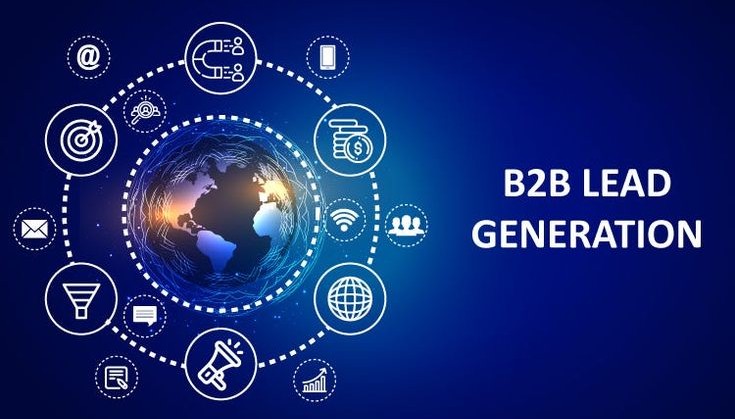
B2B lead generation is changing quickly in 2026. Businesses are no longer relying only on manual prospect research, static databases, and basic lead-scoring rules. Instead, AI is becoming part of the process, helping marketing and sales teams identify potential buyers, understand intent, enrich prospect data, and respond faster.
The growing number of AI-powered tools is also changing what businesses expect from their lead-generation technology. Accuracy, CRM integration, speed, data quality, and compliance are becoming just as important as the number of features a platform offers.
AI Is Changing the Lead Generation Process
Traditional lead generation often involves several manual steps. Marketers identify prospects, collect contact information, qualify leads, send them to sales, and wait for representatives to follow up.
AI can automate or support many of these activities.
Modern AI-powered lead-generation platforms generally fall into three areas: prospecting and scoring, data enrichment, and outreach and lead routing. Instead of expecting one platform to handle everything, businesses can build a technology stack where different tools solve different parts of the buyer journey.
This approach can help teams spend less time on repetitive research and more time engaging with qualified prospects.
Predictive Scoring vs. Intent-Based Scoring
One important development in AI lead generation is the growing distinction between predictive lead scoring and intent-based account scoring.
Predictive lead scoring generally evaluates individual contacts based on historical customer and CRM data. The goal is to identify leads that have characteristics associated with a higher likelihood of conversion.
Intent-based scoring works differently. Instead of focusing only on an individual contact, it looks at signals from an entire company to identify whether an account may currently be researching a particular product or service.
This distinction matters in B2B because purchasing decisions often involve multiple stakeholders. Identifying an interested account can therefore be just as important as identifying an individual lead. Platforms such as 6sense are built around this account-level approach.
AI-Powered Prospecting Is Becoming More Practical
Platforms such as 6sense, ZoomInfo Copilot, and Salesforce Einstein are using AI to help sales and marketing teams prioritize prospects.
6sense focuses heavily on intent-based account scoring, while ZoomInfo Copilot combines AI with B2B data to surface buying signals and assist sales teams with outreach. Salesforce Einstein provides AI-powered scoring within the Salesforce ecosystem, making it useful for organizations that want lead intelligence directly inside their CRM.
The important change is that AI is moving beyond simply providing information. Increasingly, these platforms are helping teams decide which prospects deserve attention first.
Data Enrichment Makes Leads More Useful
Having a prospect’s name and email address is not enough for effective B2B outreach.
Sales teams also need information such as company size, industry, revenue, technology usage, job role, and other firmographic or behavioral signals.
AI-powered enrichment tools can help fill these gaps and make prospect records more useful. HubSpot’s Breeze and Apollo, for example, combine data and AI capabilities to support enrichment, scoring, personalization, and outreach workflows.
Better data can help sales representatives create more relevant messages instead of sending the same generic pitch to every prospect.
Speed-to-Lead Is Becoming a Competitive Advantage
Generating a good lead is only part of the challenge. Businesses also need to respond quickly.
Slow handoffs between marketing and sales can cause valuable opportunities to lose momentum. AI-powered routing tools are therefore becoming an important part of the modern lead-generation stack.
Tools such as Cal.com, RevenueHero, and Chili Piper focus on connecting inbound prospects with sales representatives or meetings more quickly. The source research highlights significant differences in routing speed, with some platforms targeting response times measured in seconds rather than hours.
For businesses with high-intent inbound traffic, reducing the time between a prospect showing interest and speaking with a sales representative can have a meaningful impact.
Compliance Is Becoming Part of the Buying Decision
AI adoption also brings new responsibilities.
Businesses using AI for lead scoring and prospecting need to understand how customer and prospect data is collected, processed, stored, and used. Transparency around AI-generated scores is becoming increasingly important, particularly as regulatory requirements develop.
The 2026 research highlights explainability, data lineage, privacy, and compliance documentation as important criteria when evaluating AI lead-generation vendors.
For B2B organizations, the cheapest or most feature-rich tool may not always be the best choice. A platform that provides clear information about how its AI works and how customer data is handled can be a safer long-term investment.
Building the Right AI Lead Generation Stack
Companies do not necessarily need to replace their entire marketing and sales technology stack.
A better approach can be to identify the biggest weakness in the existing process and introduce AI where it can create measurable value.
For example, a business struggling to identify in-market accounts may start with intent-based scoring. A company dealing with poor prospect data may prioritize enrichment. Another organization losing leads because of slow follow-up may focus on automated routing.
Starting with a focused pilot can make it easier to measure improvements before expanding AI across the entire funnel.
The Future of B2B Lead Generation
AI is not eliminating the need for sales and marketing teams. Instead, it is changing how those teams spend their time.
The strongest B2B lead-generation strategies in 2026 are likely to combine AI-powered data analysis with human judgment, strong CRM processes, relevant messaging, and fast sales follow-up.
The goal is no longer simply to generate a larger list of leads. It is to identify the right accounts, find the right contacts, understand buying intent, and engage prospects at the right moment.
As AI continues to mature, B2B companies that connect prospecting, enrichment, scoring, routing, and outreach into one efficient workflow will be better positioned to turn buyer signals into real pipelines.
FAQs
1. How is AI transforming B2B lead generation?
AI helps B2B teams automate prospecting, improve lead scoring, identify buying intent, enrich prospect data, and speed up lead routing and outreach.
2. What is the difference between predictive and intent-based lead scoring?
Predictive scoring evaluates individual leads based on historical data and conversion patterns. Intent-based scoring identifies accounts showing active interest in a product or service.
3. Why is speed-to-lead important in B2B sales?
Fast follow-up helps businesses engage prospects while their interest is still high. AI-powered routing can quickly connect qualified leads with the right sales representative.
4. How does AI-powered data enrichment improve lead generation?
AI enrichment adds useful information such as company size, industry, job role, technology usage, and other buyer signals, helping sales teams personalize their outreach.
5. What should businesses consider when choosing an AI lead-generation tool?
Businesses should evaluate data accuracy, CRM integration, AI transparency, privacy, compliance, ease of use, and how well the tool addresses their specific lead-generation challenges.