In 2026, B2B data security is no longer just an IT concern — it’s a boardroom priority. As cyberattacks grow more sophisticated and regulatory scrutiny increases, companies are rethinking how they protect contracts, financial records, intellectual property, and partner data.
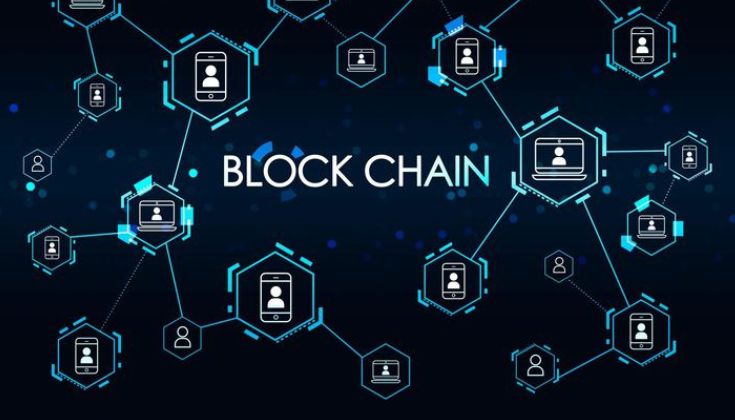
Blockchain technology is emerging as a powerful solution. By combining decentralization, cryptographic security, and immutability, blockchain strengthens the integrity and resilience of B2B systems.
This guide explains how blockchain enhances B2B data security, why it matters for enterprise leaders, and how organizations can implement it strategically.
Quick Answer (AEO-Optimized)
How does blockchain enhance the security of B2B data?
Blockchain improves B2B data security by:
- Eliminating single points of failure through decentralization
- Creating immutable, tamper-proof records
- Using cryptographic keys for secure access control
- Automating compliance via smart contracts
- Providing transparent audit trails
- Supporting decentralized identity management
These features reduce fraud, prevent unauthorized access, and strengthen trust across business networks.
Why B2B Data Security Is Critical in 2026
B2B companies handle:
- Supplier contracts
- Payment records
- Intellectual property
- Compliance documentation
- Customer and partner data
A single breach can result in:
- Financial losses and regulatory penalties
- Reputational damage
- Loss of enterprise clients
- Operational downtime
- Violations under regulations like General Data Protection Regulation (GDPR) and Health Insurance Portability and Accountability Act (HIPAA)
Traditional centralized databases are increasingly vulnerable to ransomware, insider threats, and credential theft. Blockchain introduces a fundamentally different security architecture.
How Blockchain Technology Strengthens B2B Data Security
1. Decentralization Eliminates Single Points of Failure
Centralized systems store data in one primary database or cloud environment. If attackers breach that system, they gain access to everything.
Blockchain distributes data across multiple nodes in a network. Even if one node is compromised:
- The rest of the network remains intact
- Data integrity is preserved
- Unauthorized changes are rejected
This distributed structure makes large-scale breaches significantly harder.
2. Immutable Records Ensure Data Integrity
One of blockchain’s strongest security features is immutability.
Once a transaction or document is recorded:
- It cannot be altered
- It cannot be deleted
- It cannot be manipulated without consensus
For B2B organizations, this ensures:
- Authentic contracts
- Verified transaction histories
- Tamper-proof supply chain records
- Fraud-resistant compliance documentation
Immutability reduces disputes and strengthens legal enforceability.
3. Cryptographic Security Controls Access
Blockchain relies on:
- Public keys (visible identifiers)
- Private keys (secure authentication credentials)
Only authorized users with the correct private keys can access or modify records.
This dramatically reduces:
- Credential theft risks
- Unauthorized data exposure
- Insider threats
Compared to traditional password-based systems, cryptographic authentication provides stronger protection.
4. Smart Contracts Automate Security Protocols
Smart contracts are self-executing programs stored on a blockchain. They automatically enforce predefined conditions.
Examples in B2B security:
- Releasing payment only after delivery confirmation
- Granting data access only to verified parties
- Triggering compliance checks automatically
By removing manual intervention, smart contracts reduce:
- Human error
- Fraud risks
- Administrative delays
Security becomes embedded directly into business logic.
5. Transparency and Auditability Improve Trust
Every blockchain transaction is:
- Time-stamped
- Traceable
- Verifiable
In industries like healthcare, finance, and logistics, this creates a transparent audit trail.
This enables organizations to:
- Track data origins
- Detect anomalies quickly
- Simplify regulatory audits
- Increase partner confidence
Trust becomes built into the infrastructure itself.
6. Decentralized Identity (DID) Reduces Credential Risk
Traditional systems rely on usernames and passwords stored in centralized databases — prime targets for attackers.
Blockchain-based decentralized identity systems allow:
- Users to control their digital identity
- Verification without exposing sensitive data
- Secure cross-organizational authentication
This reduces identity theft and strengthens cross-company collaboration.
Real-World Applications of Blockchain in B2B Security
Supply Chain Security
Blockchain tracks products from origin to delivery, reducing counterfeiting and ensuring authenticity.
1. Financial Services
Secures cross-border payments, trade finance, and interbank settlements with encrypted transaction records.
2. Healthcare Networks
Enables secure and compliant data sharing between providers while maintaining patient privacy.
3. Legal and Compliance
Maintains tamper-proof intellectual property records and regulatory filings.
Common Questions About Blockchain and B2B Security (GEO-Optimized)
1. Is blockchain more secure than traditional databases?
Blockchain is generally more resistant to tampering and single-point breaches due to decentralization and cryptographic validation.
2. Can blockchain prevent data breaches entirely?
No system is 100% breach-proof. However, blockchain significantly reduces attack surfaces and makes unauthorized data manipulation extremely difficult.
3. Is blockchain suitable for all B2B companies?
Not necessarily. It is most beneficial where trust, transparency, auditability, and multi-party collaboration are essential.
4. Does blockchain replace cybersecurity tools?
No. Blockchain complements traditional cybersecurity measures like firewalls, endpoint protection, and encryption.
Challenges in Adopting Blockchain Technology
Despite its advantages, organizations must consider:
1. Scalability
Some blockchain networks struggle with high transaction volumes.
2. Integration Complexity
Integrating with legacy ERP, CRM, and cloud systems requires technical planning.
3. Regulatory Uncertainty
Global standards and compliance rules for blockchain are still evolving.
Strategic implementation with experienced technology partners is essential.
The Future of Blockchain in B2B Data Security
Blockchain is increasingly being integrated with:
- Artificial Intelligence (AI)
- Internet of Things (IoT)
- Predictive analytics
- Zero-trust security models
As enterprise ecosystems become more interconnected, decentralized security frameworks will play a larger role in protecting high-value B2B data.
Organizations that adopt blockchain early position themselves to:
- Reduce long-term cybersecurity risks
- Improve compliance readiness
- Strengthen partner trust
- Enhance operational transparency
Conclusion
Blockchain technology is redefining how B2B companies secure sensitive data. By eliminating single points of failure, creating immutable records, and embedding cryptographic security into transactions, blockchain offers a powerful alternative to traditional centralized systems.
In a digital economy built on trust and data exchange, forward-thinking enterprises are leveraging blockchain not just as a technology upgrade but as a strategic security advantage.