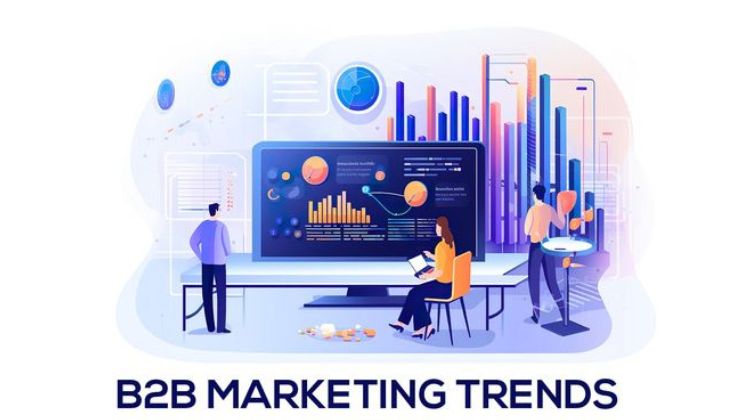
As we move through mid-2026, one strategy clearly stands out as the dominant force reshaping B2B marketing: AI-powered account-based personalization.
This approach combines artificial intelligence with Account-Based Marketing to help organizations scale highly relevant experiences to their most valuable accounts. It enables teams to predict buyer needs, automate complex workflows, personalize engagement across channels, and deliver measurable revenue impact.
AI is no longer experimental. It has become foundational to marketing operations.
LinkedIn’s 2025 B2B Marketing Benchmark, still highly relevant in 2026, reports that 95 percent of B2B marketers use AI at least weekly, and 65 percent use it daily. The difference between average performers and market leaders now lies in how deeply AI is integrated into strategy and execution.
Below is why AI-powered ABM leads in 2026 and how organizations can implement it effectively.
AI’s Operational Dominance in B2B Marketing
AI adoption has accelerated from isolated pilot projects to daily operational use across marketing and revenue teams.
Today, AI powers:
- Content creation
- Personalization engines
- Lead scoring models
- Predictive analytics
- Campaign optimization
- Intent detection
According to recent benchmarks, 81 percent of channel marketers use AI for content creation. Many report approximately 40 percent improvement in lead scoring efficiency, along with measurable gains in SEO performance and revenue contribution.
Generative AI now supports the creation of landing pages, account-specific emails, whitepapers, case studies, and social content at scale. Predictive tools analyze buyer signals and behavioral data to forecast intent, prioritize accounts, and recommend next-best actions.
The result is a shift from reactive marketing to predictive, data-driven orchestration.
ABM and AI: The High-ROI Growth Engine
Account-Based Marketing continues to outperform traditional broad-based demand generation. In 2026, its integration with AI has amplified that advantage significantly.
More than 71 percent of B2B marketers actively run ABM programs, and integration with demand generation strategies continues to grow.
Performance benchmarks show:
- ABM delivers higher ROI than traditional marketing tactics, with many reporting double returns.
- Engaged ABM accounts achieve 60 to 80 percent higher win rates.
- Mature programs report deal sizes up to 200 percent larger.
- Between 66 and 72 percent of marketers plan to expand AI and machine learning within their ABM programs.
AI enhances ABM by enabling scalable personalization. Platforms such as Demandbase, 6sense, and LinkedIn’s Predictive Audiences use intent data and behavioral signals to dynamically update segments and personalize outreach.
Instead of manually building custom campaigns for each account, marketers can now execute true one-to-one or one-to-few strategies at scale, without sacrificing relevance.
Hyper-Personalization: Meeting Buyer Expectations
B2B buyers expect relevance and context at every touchpoint.
Research consistently shows that 71 percent of buyers expect personalized interactions. When personalization is missing, frustration increases and trust declines.
Effective personalization can increase ROI by up to 30 percent and boost conversion rates by 25 to 30 percent.
In 2026, personalization goes beyond basic demographic targeting. It includes:
- Role-specific messaging within buying committees
- Industry-focused case studies
- Stage-based content recommendations
- Predictive timing for outreach
- AI-generated messaging aligned with pain points
Buying groups now commonly include six to eleven stakeholders, each with different priorities. AI enables marketing teams to tailor communication to each decision-maker, whether financial, technical, or operational.
This creates a coordinated, cohesive experience that accelerates consensus and shortens sales cycles.
Multichannel and Interactive Engagement
B2B buyers interact across multiple platforms. LinkedIn remains the leading professional network, but buyers are also active on YouTube, industry communities, webinars, and other digital channels.
AI helps optimize:
- Channel selection
- Timing of outreach
- Content format
- Message sequencing
Interactive content such as calculators, assessments, and quizzes drives approximately twice the engagement of static content. Video content also plays a growing role in ABM campaigns, helping brands build authority and trust while personalizing outreach.
AI tools now assist in scripting, tailoring, and optimizing video content at scale, making personalized multimedia engagement more accessible.
The goal is to meet buyers where they are and deliver value in the format they prefer.
Agile, Data-Driven Execution with ESG Alignment
Speed and adaptability define competitive advantage in 2026.
AI-integrated CRM and marketing automation platforms, including Salesforce and HubSpot, enable real-time performance tracking, A/B testing, and continuous optimization. Many organizations report approximately 30 percent reduction in time to market when AI supports campaign planning and execution.
At the same time, trust is shaped not only by personalization but also by corporate responsibility.
More than 78 percent of buyers expect strong environmental, social, and governance commitments from vendors. Integrating sustainability messaging and responsible business practices into ABM strategies strengthens credibility and long-term brand trust.
In 2026, AI maturity is measured by outcomes. The most advanced organizations use AI behind the scenes to improve relevance and efficiency while ensuring that human judgment remains central to relationship building.
Your 2026 Action Plan for AI-Powered ABM Success
To lead in this environment, organizations must move beyond surface-level AI usage and adopt a structured, strategic approach.
1. Adopt AI deeply
Embed predictive analytics, personalization engines, and automation across marketing and sales workflows rather than limiting AI to content generation alone.
2. Scale ABM intelligently
Integrate CRM systems, intent data platforms, and marketing automation tools to build unified account profiles and enable dynamic segmentation.
3. Prioritize hyper-personalization
Tailor messaging at the account level, role level, and deal stage level to address specific needs and objections.
4. Expand multichannel engagement
Use video, interactive tools, and data-driven optimization across LinkedIn, email, web experiences, and sales outreach.
5. Measure revenue impact
Shift focus from vanity metrics to pipeline contribution, deal velocity, win rates, and revenue per target account.
6. Maintain ethical and responsible AI practices
Ensure transparency, data privacy compliance, and human oversight in all AI-driven engagement.
Conclusion
AI-powered account-based personalization is not a temporary trend. It represents a structural shift in how B2B marketing drives revenue and builds trust.
By combining predictive intelligence, scalable personalization, and measurable ROI, organizations can generate higher-quality pipelines, close larger deals faster, and create stronger long-term customer relationships.
In 2026, competitive advantage belongs to those who personalize with precision and execute with intelligence.
What is your biggest challenge in scaling AI-personalized ABM today, data integration, content production, sales alignment, or measurement? Addressing these barriers now will position your organization for sustained growth.
For more advanced B2B strategies, AI implementation guides, and marketing trend insights, visit Techadvisor Pro and stay ahead in 2026.